• Turning the Handle (Tour)

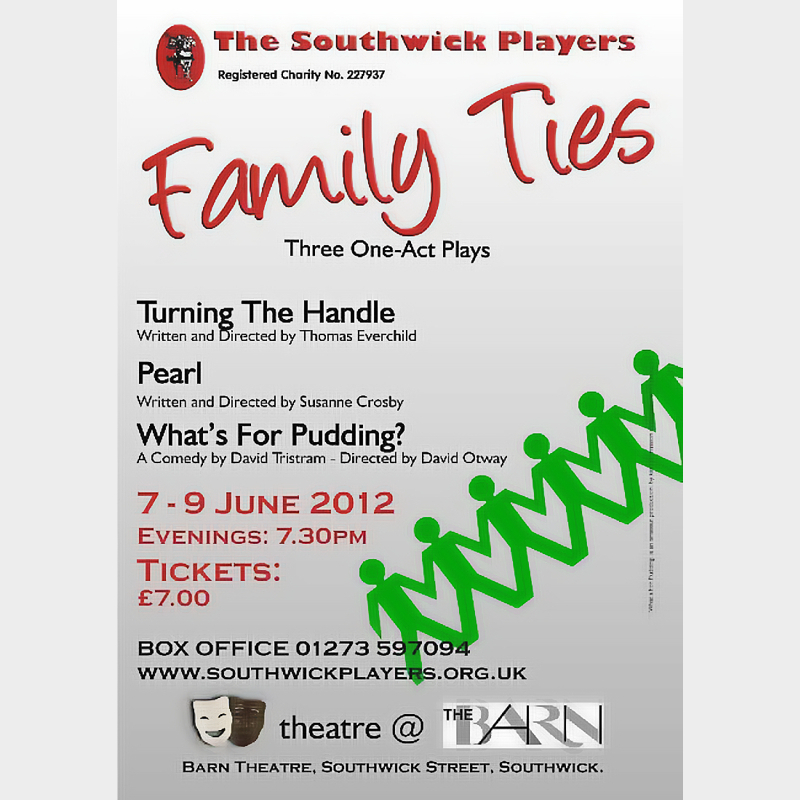
    Turning the Handle (Barn Theatre)
    Writer/Director: Thomas Everchild
    Performer: Philippa Hammond

    FULL REVIEW

    One-act plays are the theatrical equivalent of a short story and require the same rules to work. Character and plot development must rely on established shorthand and the drama needs a twist.

    In the monologue Turning The Handle, Philippa Hammond portrayed an artless Edwardian lady recalling life and love in front of an early cinematograph, apparently never quite realising the effect of loosening draperies on her audience.

    It was a charming solo turn, written and directed to be beautifully out of kilter by Thomas Everchild.

    The Argus
    Louise Schweitzer


  • Neverland Singularity (The)

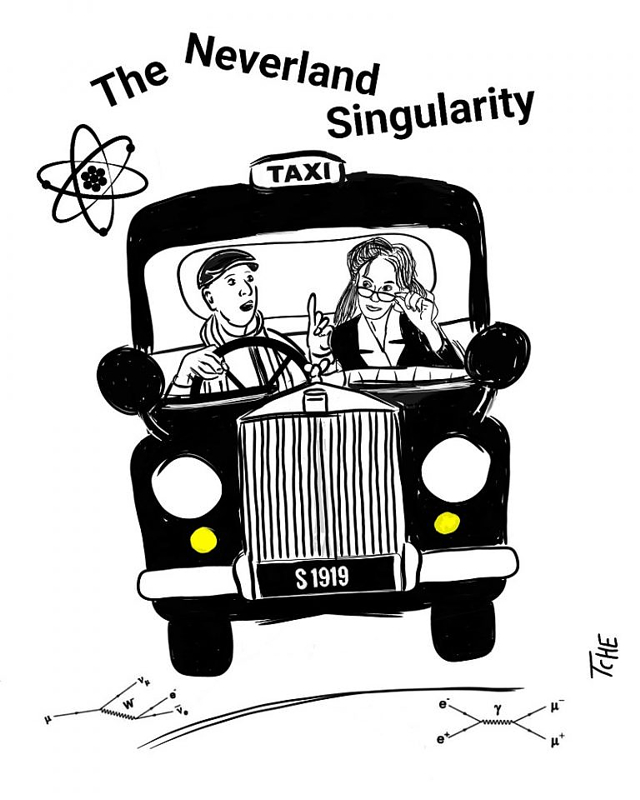
    The Neverland Singularity (Short Plays at The Barn Theatre, Shoreham)
    Writer/Director: Thomas Everchild
    Performers: Philippa Hammond, Thomas Everchild

    FULL REVIEW

    Appearing in The Neverland Singularity [which he also wrote], Thomas Everchild played a taxi driver taking a scientist to a conference. Stuck in a traffic jam he tried to engage his fare in conversation which ranged from evolution and the existence of God to physics. With Philippa Hammond as his hapless passenger they provided extremely good comedy.

    The Argus
    Barrie Jerram


  • Fanny Hill – (Edinburgh Festival Fringe)

    Fanny Hill (Edinburgh Festival Fringe)
    (from Memoirs Of A Woman Of Pleasure by John Cleland)
    Producer: Philippa Hammond
    Writer/Director: Thomas Everchild

    This is a genuinely good production. It is adult and includes a good deal of nudity though nothing too explicit; it’s very rude, often funny, but without ever descending into bad taste. Fringe drama doesn’t come any more stimulating than this.
    (The List)

    FULL REVIEW

    Fanny Hill (Edinburgh Festival Fringe)
    (from Memoirs Of A Woman Of Pleasure by John Cleland)
    Producer: Philippa Hammond
    Writer/Director: Thomas Everchild

    For those of you unaware of the book, Fanny Hill is a scandalous piece of Georgian erotic fiction that falls into the British tradition of bawdiness somewhere between Henry Fielding’s Tom Jones and Joan Collins’ The Stud.

    Like Tom Jones, it is an odyssey from innocence and into the high fashion, sophisticated tastes and debauchery of the London of Hogarth and Dr Johnson. The Madames, rakes, fops and sailors of this time are wonderfully evoked and the erotic adventures and encounters of our heroine vividly realised. That Philippa Hammond, in the role of Fanny, can narrate at the same time as simulating a good back-alley rogering is remarkable.

    It would be wrong, though, to mistake Fanny Hill for being some sort of cheap thrill theatre. Philippa Hammond, who besides playing the lead is the driving force behind the production, realises the piece in some style. To adapt such a notorious work of fiction as this cannot have been an easy task. But it is one that the ensemble cast uniformly rise to. In this they are aided by an admirable collection of period costumes of West End standard.

    This is a genuinely good production. It is adult and includes a good deal of nudity though nothing too explicit; it’s very rude, often funny, but without ever descending into bad taste. Fringe drama doesn’t come any more stimulating than this.

    The List
    Ross Holloway


  • Fanny Hill (Edinburgh Festival Fringe )

    Fanny Hill (Edinburgh Festival Fringe)
    (from Memoirs Of A Woman Of Pleasure by John Cleland)
    Producer: Philippa Hammond
    Writer/Director: Thomas Everchild

    The play is packed with erotic adventures of all shapes and sizes nailed by a versatile cast which delights in taking many parts, dropping many breeches and lifting many skirts. It’s deliciously naughty and well worth staying up for.
    (The Scotsman)

    FULL REVIEW

    Fanny Hill (Edinburgh Festival Fringe)
    (from Memoirs Of A Woman Of Pleasure by John Cleland)
    Producer: Philippa Hammond
    Writer/Director: Thomas Everchild

    This adaptation of John Cleland’s neglected Georgian masterwork is a hugely enjoyable bawdy romp through one woman’s life and sex life, which for the purposes of the tale appear to be virtually interchangeable.

    The eponymous heroine, a naïve country virgin, finds herself all alone in the world with nothing but a bag of second-hand trinkets to her name, when a chance meeting with an old schoolfriend sets her on the path to the big city and a life as a streetwise whore. But Fanny is not wretched at the thought of having to turn tricks to make her way, and in fact fate continually smiles down on this “tart with a heart”: when one brothel door slams in her face another seems courteously to fly open.

    The play is packed with erotic adventures of all shapes and sizes nailed by a versatile cast which delights in taking many parts, dropping many breeches and lifting many skirts. It’s deliciously naughty and well worth staying up for.

    The Scotsman
    (Jane-Ann Purdy)


  • Fanny Hill (Edinburgh Festival Fringe)

    Fanny Hill (Edinburgh Festival Fringe)
    (from Memoirs Of A Woman Of Pleasure by John Cleland)
    Producer: Philippa Hammond
    Writer/Director: Thomas Everchild

    Deliciously risqué play makes lust a big laugh

    Afterthought Productions have a scorcher of a show on their hands with this one. It’s sure to be a hit with Fringe audiences. Get your ticket now, because Fanny Hill is going to sell out.
    (Edinburgh Evening News)

    FULL REVIEW

    Fanny Hill (Edinburgh Festival Fringe)
    (from Memoirs Of A Woman Of Pleasure by John Cleland)
    Producer: Philippa Hammond
    Writer/Director: Thomas Everchild

    Deliciously risqué play makes lust a big laugh

    Fanny Hill first appeared with her Memoirs Of A Woman Of Pleasure in literary circles in 1749, and it’s astonishing to think that for more than 200 years, until 1970, this book remained firmly on the banned list.

    In Afterthought’s production a company of nine players sets about re-enacting the diary of the naive young country virgin turned expert pleasurer of gentlemen. Thomas Everchild’s adaptation for the stage catches the essential lusty humour and irreverence of John Cleland’s original book, and gives the cast a firm grounding from which to work.

    The regal strains of the harpsichord link each scene and are in direct contrast to the starkness of the set, which is completely black but for two tables and a stool. This lack of set dressing concentrated the attention fully on the characters, relieved the audience of unwanted distractions, and brought the intricacies of the 18th century costumes – designed by Isobel Drury – to the fore.

    Actress Philippa Hammond is instantly likeable as the much-sought-after Fanny, and brings an unexpected grace and vulnerability to the character. Between them the remainder of the cast portray myriad characters, presenting the illusion of a much larger company. As the perils of Mistress Fanny unfold, they manage a whirlwind of costume and character changes with ease. Some nice comic touches keep the pace up tempo. One scene in particular, in which an unwanted suitor tries to prise Fanny’s legs apart, is priceless. While some scenes are deliberately overplayed, the direction is always tasteful, and you never quite see as much as you imagine you have. Nevertheless, the inclusion of any number of peccadilloes, and an orgy scene, make this very definitely adults-only.

    The whole piece is firmly set in the bawdy school of low humour. Touches of Benny Hill and Carry On surface briefly, but mostly the intelligent script explores the base reality behind the veneer of genteel respectability in an enchanting and highly entertaining way. The sex scenes are handled with either the aforementioned comic touch or, more often than not, a sensuality and sensitivity that is surprising and most welcome. While in this day and age Fanny Hill might be considered tame, its capacity to outrage is still there, as demonstrated. last night by the audience reaction to the naughtier scenes, and outrage is an element that this production uses to its best advantage.

    Afterthought Productions have a scorcher of a show on their hands with this one. It’s sure to be a hit with Fringe audiences. Get your ticket now, because Fanny Hill is going to sell out.

    Edinburgh Evening News
    (Liam Rudde)


  • Glimpse (Tour)

    Glimpse (Marlborough, Brighton)
    An Honorary Man, Turning the Handle, Little Girls Like to Kiss, Backstage Whispers
    Writer/Director: Thomas Everchild
    Performer: Philippa Hammond

    Glimpse is graspable, engrossing and very entertaining; channel-flicking glances at scenes you won’t want to switch over.
    (The Argus)

    FULL REVIEW

    Glimpse (Marlborough, Brighton)
    An Honorary Man, Turning the Handle, Little Girls Like to Kiss, Backstage Whispers
    Writer/Director: Thomas Everchild
    Performer: Philippa Hammond

    Glimpse Women Through the Ages

    A hit from the Edinburgh Fringe festival was staged at the Marlborough Theatre last week, filling it with drama, suspense and genuine laughs. Glimpse is a collection of four one-act plays by Thomas Everchild, all performed by Philippa Hammond. Each monologue delves into a different character and spins a tale which reels the audience in as the dimensions unfold. Hammond expertly places her audience in the scene, deftly moving across centuries and cultures as she embodies the mind and motivations of four women.

    First she is Hypatia, a fifth century scientist and philosopher who has been virtually erased from history. Her questioning curiosity and fascination with physics and philosophy leaves her unwilling to fall in line behind other women. But by opposing political dogma in her quest for knowledge, she poses a threat only to herself.

    Transforming in character, Hammond next plays a very proper Edwardian lady, drawn into the seedier side of the emerging motion picture business. Hammond makes real the young girl dazzled by love and impelled by necessity. Her performance is subtle and evades sensation, while Everchild’s writing doesn’t blind us with its intentions.

    While the settings may be historical, the themes translate easily into modern concerns. These women have stories which demonstrate a survival of spirit even when the odds are stacked against them.

    The third play switches to a cinematic scene, set in Forties New York, behind the frosted glass window of a private eye’s office. Hammond senses her character in every movement, her gait falling into louche photographic poses …. What begins as comic book cliché becomes a plot of love, jealousy, paranoia and missing persons befitting a pulp detective paperback, with its deadly twist on the last page.

    Finally, we are snapped back closer to home. Everchild’s understated writing becomes increasingly comic in a deadpan scene of amateur theatre, the confessions of a bit-part in a hopeless fringe production.

    Glimpse is graspable, engrossing and very entertaining; channel-flicking glances at scenes you won’t want to switch over.

    The Argus
    Lyndsey Winship


  • Glimpse: Part Two (Edinburgh Festival Fringe)

    Glimpse part two: – (one act plays)
    Little Girls Like To Kiss & Backstage Whispers
    (Edinburgh Festival Fringe)
    Writer/Director: Thomas Everchild
    Performer: Philippa Hammond

    Glimpse is impressive, and well-named; fleeting moments of subtle theatrical insight…
    (The Scotsman)

    FULL REVIEW

    Glimpse part two: – (one act plays)
    Little Girls Like To Kiss & Backstage Whispers
    (Edinburgh Festival Fringe)
    Writer/Director: Thomas Everchild
    Performer: Philippa Hammond

    Glimpse is a collection of four solo shows presented by Philippa Hammond, two at a time on alternate evenings. In this case it’s a smoke-filled 1940s private dick yarn and a take on life at the shallow end of the theatrical talent pool. And very good they are too.

    The first, Little Girls Like to Kiss, shows the gumshoe’s ubiquitous breathy secretary in her own right. Marcia Blouse is long-suffering, pouting and wisecracking. She is also fragile – lost without the defining influence of her absent boss? Not likely – more afraid that others are about to discover her guilty secret.

    Cracks in the cool, sassy facade grow and meet, forming a portrait of paranoia. Hammond herself twists with the plot her character reports; first manipulative and catty, then desperate and cornered. Ultimately Marcia survives, and takes control again. Fittingly, this brings out Hammond’s best – understated and impressively controlled.

    The second vignette, Backstage Whispers, has the same sense of command in script and acting. Hammond excels as the aspiring actor and skirts around the pitfalls of self-indulgence with admirable restraint. Even the “behind the curtain” jokes are sharp and entertaining.

    Again the writing is taut, wry and understated. At best reminiscent of Alan Bennet’s Talking Heads, this is a touching tale of a call-box tart who lives and dies in 18 lines. Glimpse is impressive, and well-named; fleeting moments of subtle theatrical insight.

    The Scotsman
    James Kirkup